Why We All Keep Going Back to Japan
Twenty years chasing powder, from secret to global obsession.
Austin Toner succinctly sums up the appeal of skiing in Japan and how he experienced working, living and skiing in Japan 20 years ago before settling in Hakuba with his young family.
I never expected to fall in love with Japan. In fact, the first time I landed there, I wasn’t even going skiing. I was twenty, on my way to Fernie, Canada for my first overseas season, and Japan was simply the cheapest stopover. That time I’d barely seen more than Narita Airport, a nearby hotel and my first beer vending machine so it wasn’t until over 6 months later, on the way home from Canada, that Japan properly got hold of me.
I decided to spend a couple of days exploring Tokyo before heading back to Australia. Nothing could have prepared me for it. The first time you walk through Tokyo, it genuinely feels like you’ve landed on another planet. The lights. The sounds. The organised chaos. Bright lights, neons, and buildings with endless weird things to explore at every intersection.
I remember laughing with my mate “should we hold hands?” as we stepped off at Shibuya station. Tiny ramen bars and hustlers trying to take advantage of naive westerners who had one too many chu-hais. People moving with purpose in every direction.
I’d travelled overseas before, but this was different. By the end of the day I was exhausted, not from walking, but from trying to process everything I was seeing and the overstimulation that was so foreign. Somewhere between the neon, the ramen and wondering why every second vending machine seemed to sell beer or cigarettes, I remember thinking…
“I’m definitely coming back here.”
I just didn’t know that “coming back” would eventually become the next twenty years of my life.The following northern winter, after a very good time was had at Falls Creek, I did exactly that. Not in style, mind you.
I flew into Osaka as it was cheaper than Tokyo. I had a credit card and enough money to convince myself everything would somehow work out. Through a Kiwi I’d met on the flight, I found myself staying in Dobutsuen-mae before discovering the cheapest way to Hokkaido wasn’t another flight, it was a 24-hour ferry from Osaka to Otaru.
So that’s exactly what I did.
I walked off the ferry with sea legs, climbed onto a bus bound for Niseko and, before long, walked straight into Wild Bill’s and an extremely strong Long Island iced tea. Looking back now, that journey probably summed up the era perfectly. There was no Instagram. No carefully curated itineraries. No luxury airport transfers. You followed recommendations from mates, trusted complete strangers who looked like minded and figured the rest out along the way.
For the first month I was basically living off my credit card, hoping I could find another job that wasn’t an overnight shift because I’d already decided I wanted to make the absolute most of this. Going skiing with no sleep wasn’t sustainable and neither was missing out on the fun working the graveyard shift. That season changed everything.
This was how I started building a life between Australian winters at Falls Creek and northern winters in Japan. What started as ‘just another season’ turned into twenty consecutive winters chasing snow with a detour to Morzin, France but ironically, that winter in Europe taught me something I wasn’t expecting.
I missed Japan.
Not because the Alps weren’t incredible – they absolutely were, and boy oh boy did I have the time of my life! Though I realised, Japan had become something much bigger than a ski destination. It had become home to my powder addiction and the humans that welcomed me there with frothy open arms.
Back then, Japan wasn’t really on everyone’s radar. If you ended up in Niseko or Hakuba, chances were someone had quietly let you in on the secret. There were no endless YouTube edits or Instagram reels convincing the world to visit. Someone simply leaned across a bar and said,
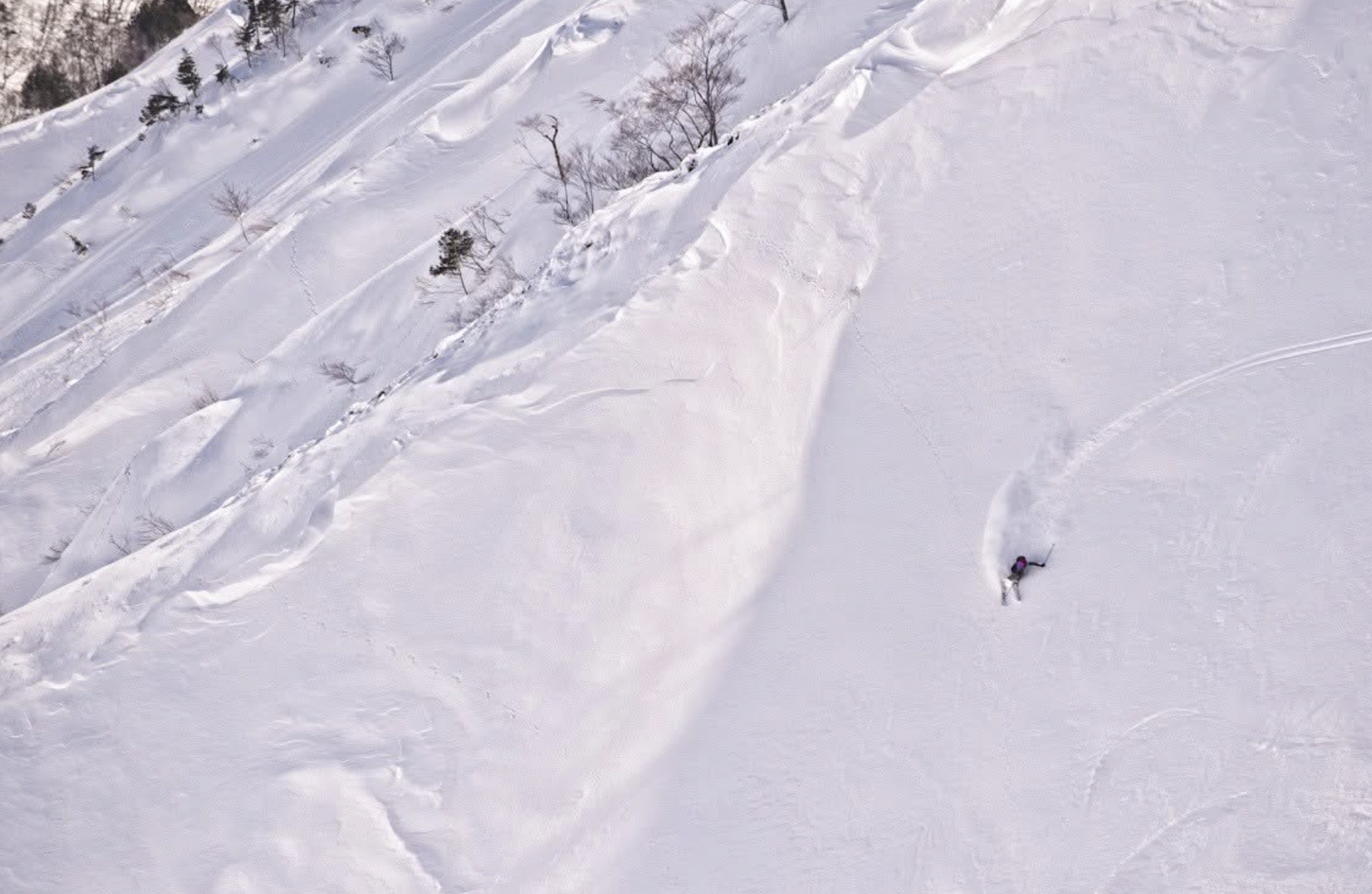
“Mate… you’ve got to ski Japan.” That was marketing. The foreign community was small enough that you recognised faces in lift queues and bars. You’d finish work, head into town, and by the end of the night you’d probably have met three new people who’d become lifelong friends. The mountains felt like the world’s best powder paradise. The possibilities endless. Even the ski gear was different. People talk about Japow now as though it’s always been the powder capital of the world. The snow was. The equipment wasn’t. The first time I skied a genuinely fat powder ski, everything changed.
Within days of skiing the K2 Pontoons I purchased a pair of Atomic Thugs on my credit card because there was simply no going back. As the saying goes, once you go fat you don’t go back! Entrepreneurs like the good folk at Rhythm Japan recognised what was happening before most others did. They weren’t simply renting skis; they were helping reshape how people experienced Japanese powder. Looking back now, I realise I arrived at a pivotal moment in time. Not the beginning of Japan skiing.
Far from it.
But perhaps the beginning of when the rest of the world started paying attention. Every year a few more people arrive. A few more stories were told. A few more films were made, dreamy Hokkaido pillow playlands and phenomenal Honshu Northern Alps big mountain lines blowing backcountry frothers minds! A few more mates came back saying, “You have to see this place, have you watched this?.”
The secret slowly escaped and momentum gathered. Today, Japan is THE most sought-after ski destination on Earth. People often ask whether I think it’s better now or better back then.
Honestly, I think that’s the wrong question.
Japan isn’t better. It isn’t worse. It’s just different. The towns have grown. The industry has evolved. The people have changed.
But every winter, when Winter finally arrives after Autumn’s incredible colours, I still remember that young bloke stepping off a ferry with sea legs, an overworked credit card and absolutely no idea that he’d just arrived at the place that would shape the next twenty years of his life.
Words and images: Austin Toner