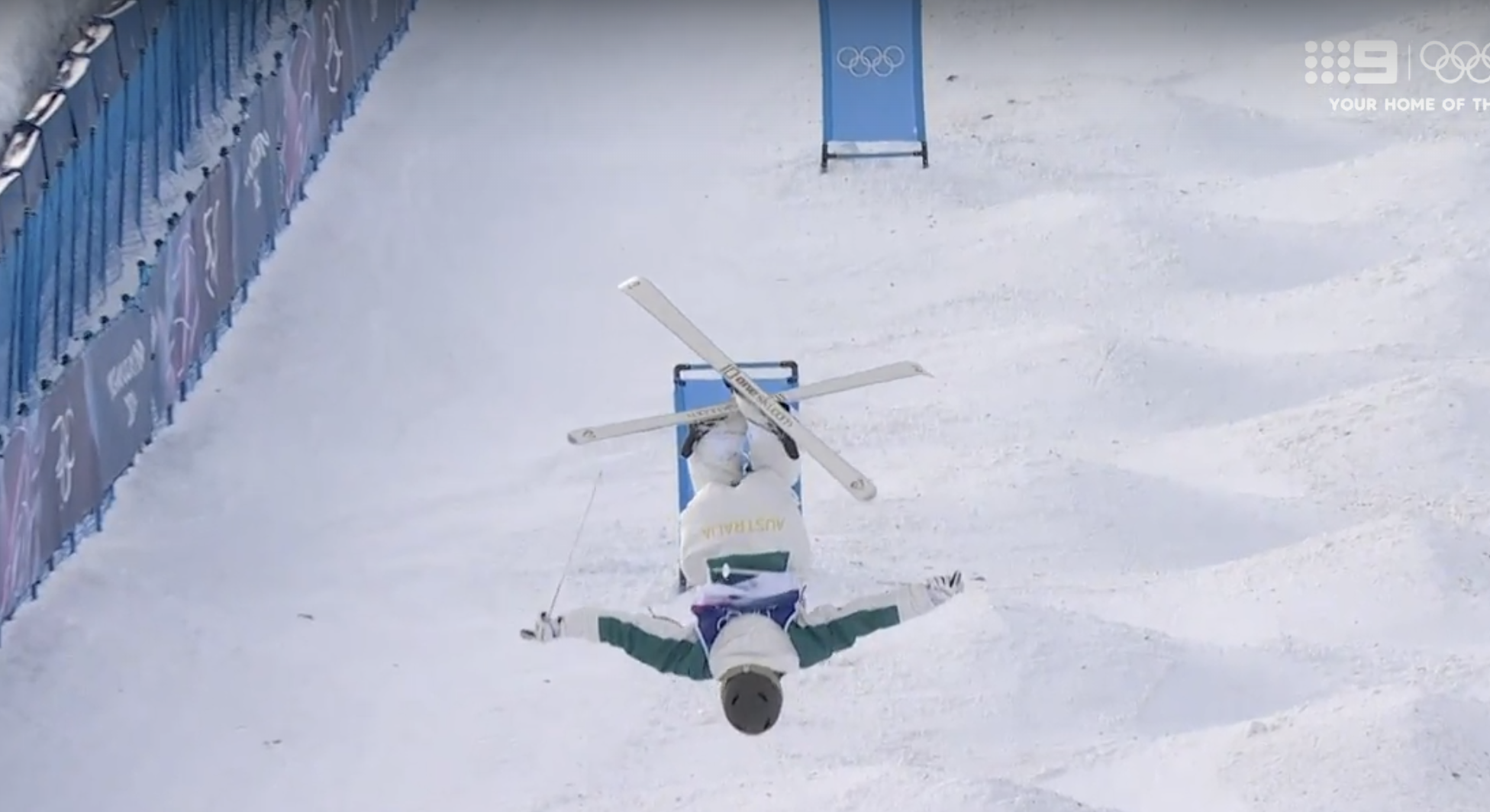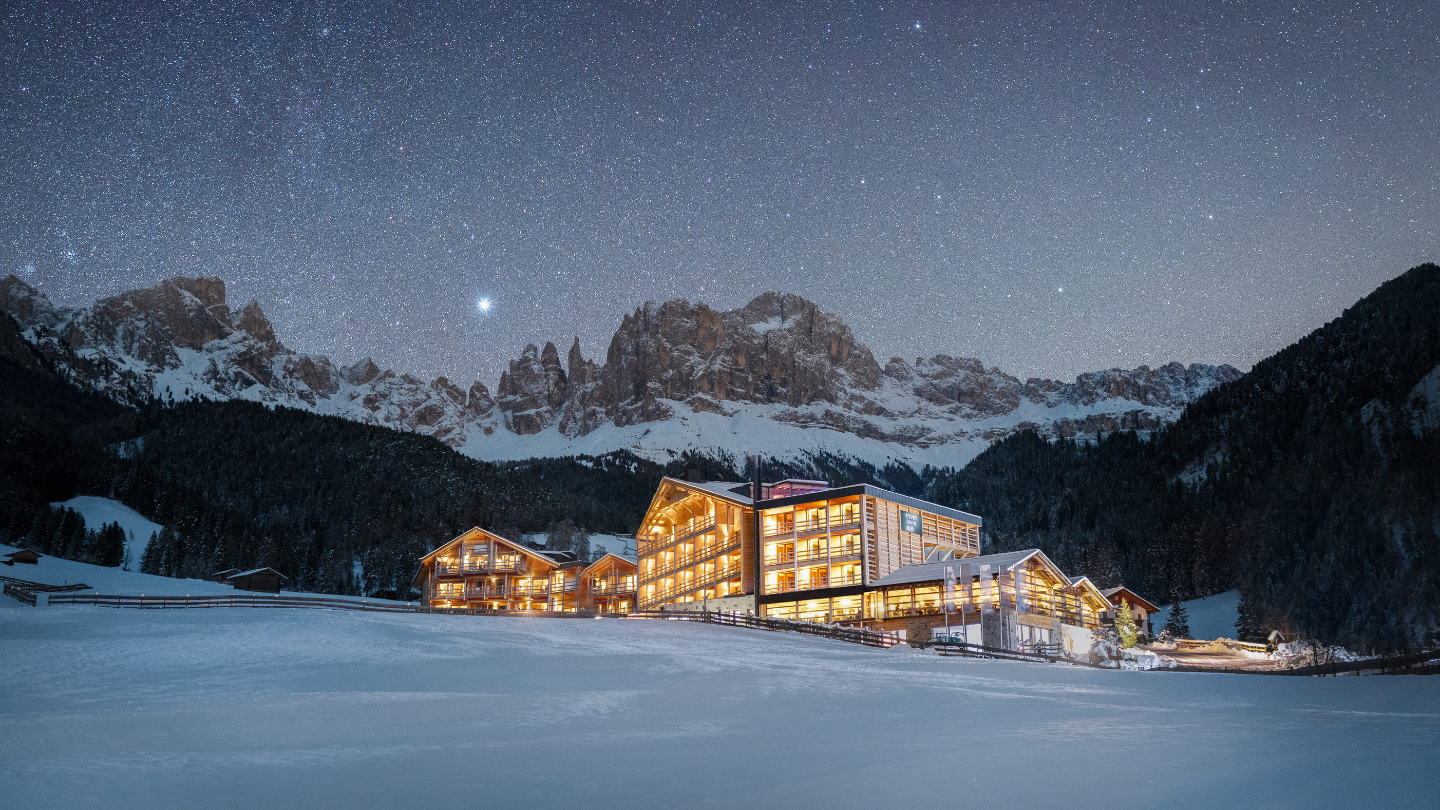
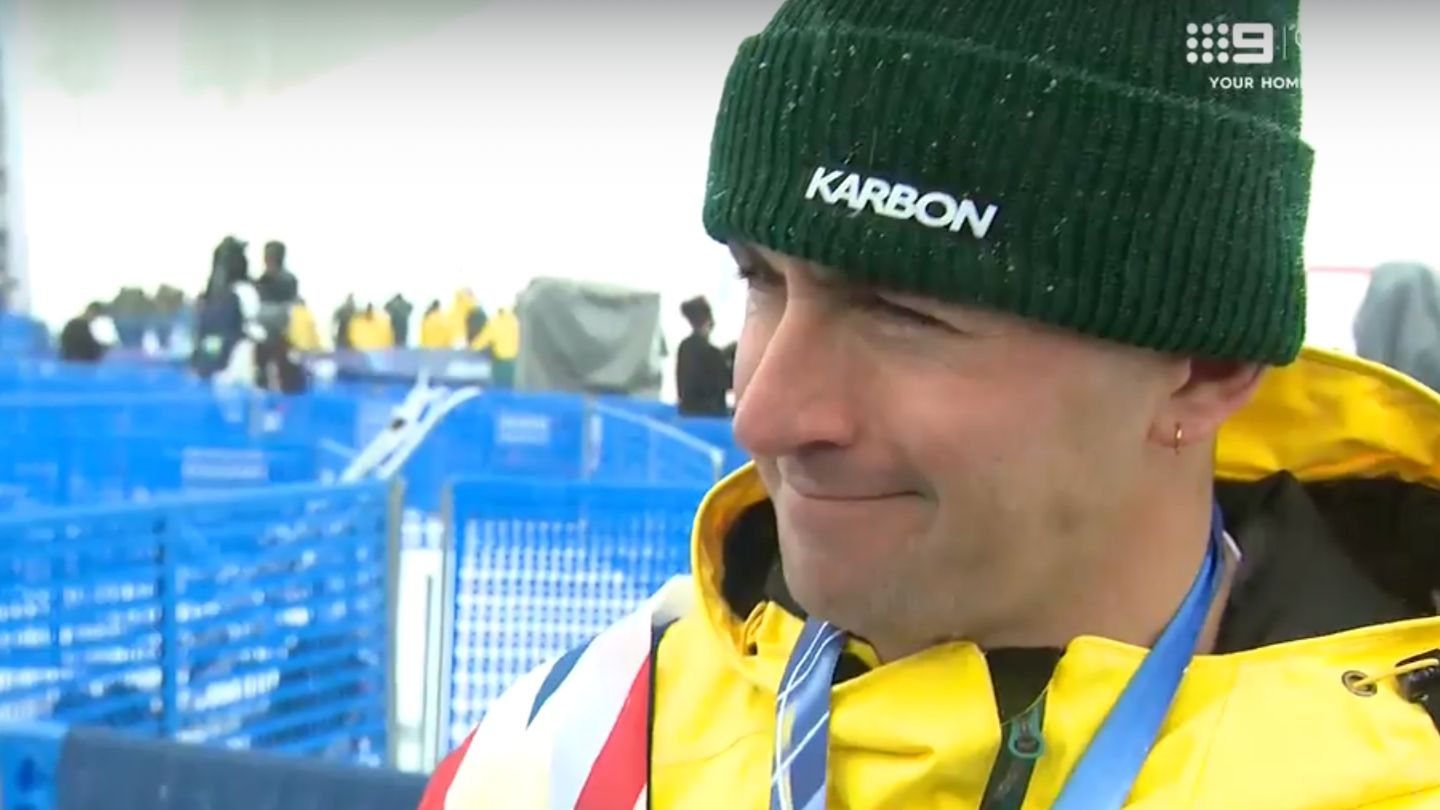
Australian moguls skier Cooper Woods delivered one of the biggest upsets of the Games, winning gold in the men’s moguls after tying with Canadian legend Mikaël Kingsbury and winning on a turns tiebreak, Australia’s first medal of these Games.

Australians are showing strong form and fighting spirit in several key events as the Winter Games progress. Snowboarder Scotty James delivered a standout performance by qualifying first for the men’s snowboard halfpipe final, leading the field with an impressive run as he chases his first Olympic gold after previously winning silver and bronze. His teammate Valentino Guseli also qualified for the 12 man final, marking a strong showing in snowboarding.
In freestyle moguls, Jakara Anthony, Australia’s defending Olympic champion, led earlier rounds and excited fans with her form, but suffered a disappointing crash in the final that ended her bid for back-to-back gold with an 8th place, a reminder of how unpredictable winter sport can be. Go Aussies, you are all amazing to be there!
Other Aussies, like Jakara topping moguls qualification, have also captured attention with strong early results, and there’s still plenty of competition to come across the rest of the program, with a strong contingent from the Jindy locals. Charlotte Wilson finished strong in 6th place as well.
Overall, the team is a mix of promising finals appearances and challenging moments, with exciting medal opportunities still ahead as the Games continue.
SkiMo (Ski mountaineering ) makes its debut this year with a team from Australia who had a terrific season during 2025 across the Aussie alpine resorts. SkiMo is a high-endurance winter sport that combines uphill climbing on skis (or on foot) with downhill skiing on rugged mountain terrain, testing both endurance and technical skill.
News from around the Venues:
These last days brought a lot of emotion to Milano Cortina 2026. There were records broken, tear-jerking tributes, unexpected results, royalty and even confessions caught on camera. Incidentally, ‘Confessions’ singer Usher was also spotted at Ralph’s Bar in Milano.
Elsewhere, passion spilt off the field of play in a series of spontaneous performances. Kiwi snowboarders delivered a heartfelt snow haka for teammate Zoi Sadowski-Synnott after she won silver in the big air, and spectators at ice hockey burst into a karaoke session of ‘Volare’, the song that is quickly becoming the Milano Cortina 2026 unofficial anthem. And while it wasn’t quite as on-key as Mariah’s rendition, it did make up in emotion. Every day now, enthusiastic sing-alongs can be heard from TeamNL House.
Passion, pageantry and performance – this is what the Olympic Games are all about!
- Tuesday brought a Swedish storm to Tesero: cross-country athletes Linn Svahn, Jonna Sundling and Maja Dahlqvist swept gold, silver and bronze in the Women’s Sprint Classic – celebrated from the stands by the country’s royal family, fans and a whopping 1.72 million watching from back home – that’s more than 10 percent of the Scandinavian nation!
- Get ready: this evening brings plenty of medals, including in women’s alpine skiing, cross-country skiing and speed skating, and men’s freestyle skiing and snowboard cross.
- And since we’re celebrating victories, Italian artist Greg Goya is inviting spectators to mark their own. Shades of Gold, recently unveiled in Milan’s Piazza Cairoli, is an interactive installation that invites passersby to inscribe their greatest triumph onto a giant Olympic medal. In recent days, it has transformed the square into a heartfelt and uplifting mosaic of personal wins.
As if competing at the pinnacle of your sport weren’t enough, some Olympians harbour other, rather unexpected, talents. At Milano Cortina 2026, several seem to be moonlighting as musicians.
Italy’s own Dominik Paris, who clinched bronze on Bormio’s Stelvio slope, is also the lead vocalist of metal outfit Rise of Voltage. Hailing from South Tyrol, he formed the band with longtime friends from the region. When the Olympic season wraps, it’s back to rehearsal: this summer, Rise of Voltage is set to play the local heavy metal festival, Alpen Flair.
Another musician in the mix is Pat Burgener, the snowboarder competing for Brazil, who racks up almost as many views for his music videos as he does for his runs on the board. Currently in his third Olympic Winter Games, his guitar travels everywhere with him – including to Milano Cortina 2026.
On a very different note is Australia’s Lara Hamilton (aka DJ Solara). The former opera singer, who once performed at the Sydney Opera House, is competing in ski mountaineering at Milano Cortina 2026. Though she stepped away from the stage to devote herself fully to sports (beyond skimo, she’s also a trail runner), music remains close. In recent years, she has taken up DJing, performing at mountain festivals and après-ski haunts in many of the same places she competes. Germany’s ice hockey player JJ Peterka, who plays for the NHL’s Utah Mammoth, is also an aspiring DJ, swapping skates for decks and spinning deep house tracks from favourite collective KEINEMUSIK when he’s off the ice.
IN THE ZONE From the outside, the Olympic Games appear as a succession of triumphant moments, a performance of confidence. Backstage, the road to glory is often less assured, with several elite athletes experiencing mental health challenges along the way. The International Olympic Committee (IOC) is addressing the issue directly at the Olympic Games. The Olympic Games Paris 2024 marked the most comprehensive mental health strategy ever implemented at a major sporting event; for Milano Cortina 2026, these measures are continued and strengthened.
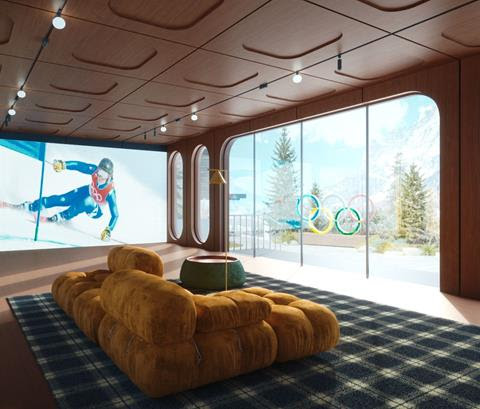
Central to this effort are the Mind Zones: dedicated spaces across the six Milano Cortina 2026 Olympic Villages designed to help athletes decompress and mentally prepare. Soft lighting, gentle furnishings, aromatherapy and curated soundscapes encourage rest and reflection, while bespoke VR-guided mindfulness and visualisation practices support focus ahead of competitions. Athletes can also write postcards to friends, colour in or simply take a breath from the world’s biggest sporting event. Staffed by safeguarding officers trained in mental health first aid, the spaces also offer confidential support when needed.
Beyond the physical environment, digital wellbeing is also being addressed. The IOC’s Cyber Abuse Protection System, first deployed at Paris 2024, uses AI to monitor social media in real time, intercepting harmful content before it reaches athletes.
Have you noticed the red squirrel? It appears everywhere once you begin looking: cast in sculpture in the mountains, stitched discreetly onto ski apparel, perched in the windows of fashion boutiques along Corso Italia, reproduced as trinkets in souvenir shops, or, if you are lucky, darting across a patch of snow in real life. With its plumed tail and alert stance, the squirrel is a symbol of Cortina d’Ampezzo. Beyond evoking the town’s abundant forests and its intimate relationship with the surrounding landscape, the scoiattolo nods to a legendary mountaineering club whose members – recognisable in their red sweaters adorned with a squirrel insignia – opened some of the most celebrated routes in the Dolomites. In Cortina, the animal is not merely decorative; it is shorthand for agility, camaraderie and a certain alpine audacity that is core to the town.
New York’s Kith has outdone itself with a new collection of apparel, accessories and commemorative collectables that pay homage to Olympic Games history. Kith and sport have been intertwined since the brand’s founding in 2011, and in celebration of Milano Cortina 2026, Kith has reprised its partnership with Team USA (featuring the one and only Shaun White in the campaign) as well as with Olympics Heritage. We’ll take one of those bomber jackets please – replete with emblems of past Olympic Games!
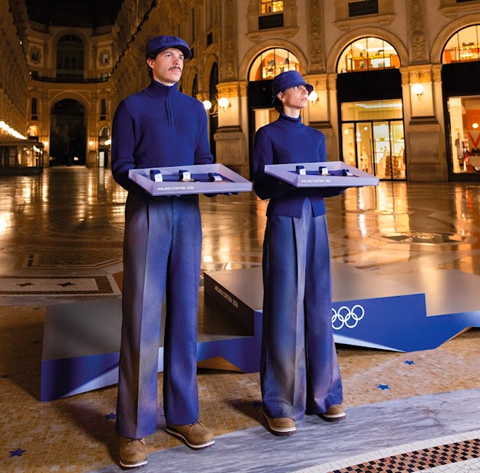
Francesca Libertore is a fashion designer and director of the master’s degree programme at the Accademia di Belle Arti di Brera in Milan. For Milano Cortina 2026, she guided a winning group of Brera students through a national competition among Italy’s leading fashion schools to design Milano Cortina 2026 Victory Ceremony Costumes, worn by those who carry the medals to the podium.
How did the students work, from the competition to actually making the costumes? The students worked in groups, producing 20 projects in total. We then reviewed them together with the Organising Committee and selected seven, with one eventually chosen to compete alongside proposals from other schools. What was really interesting was that the students could speak directly with the committee and with factories, to understand the full scope of the process. That’s not normal in a school context, where students usually work for themselves. This was a real professional situation.
What was the creative starting point? The students began with the idea of the Italian gesture, something you see everywhere: in athletes’ movements, in dance, in the way we speak with our hands. They translated this into contrasting lines on the garments, always using gold piping along the edges. This line became very important in the design.
How do the designs nod to Italian craftsmanship and fashion sensibility? There was a strong focus on tailoring, inspired by 1950s Italian fashion. For women, they emphasised the waistline — narrow at the waist, wider at the hips — with small cuts that created volume. The men’s hat drew from Southern Italian traditions, particularly Sicily. The looks are classical and respectful of sport, with technical considerations for weather: quilted nylon bombers, wool trousers, knitwear, boots and gloves designed by the students.
Short track speed skating is a full-throttle, adrenaline-packed race that sees athletes skate counter-clockwise around a 111.12m oval, in an attempt to get across the line. While the history of ice skating goes back millennia, it was the Dutch who perfected the equipment with wooden blades as a means of transport through frozen canals. Soon, all sorts of sports were being played on the ice, with short track origins tracing back to ‘pack style’ races held in North America in the early 1900s.
With breaknecking speeds and plenty of tight turns, short track is often filled with contact, fouls, crashes and disqualification. Tactics come into play – especially in the 500m – where some athletes might go from the front and block competitors, while others hang back and try to overtake. Plus, the favourite doesn’t always win: mis-timed moves, disqualifications and wipe-outs all play a part and keep spectators hooked until the very end. Few Australians would forget one of the sport’s most unexpected results when rank outsider Stephen Bradbury became the country’s first-ever Winter Olympic gold medallist at Salt Lake City 2002 after the rest of the field fell following a mass crash, the moment even coined the expression ‘Doing a Bradbury’, which essentially translates to, ‘It’s not over until it’s over’.
While short track may resemble speed skating at first glance, the sports are fundamentally different. The latter is a race against the clock on a 400m oval, with skaters competing in clearly defined lanes, prioritising rhythm and aerodynamics. Short track, by contrast, sees multiple athletes share the same narrow circuit and jostle for positions, tactics, timing and opportunism, all essential to the sport.
The short track continues until 20 February at the Milano Ice Skating Arena.
Luge evolved from ancient Alpine sledding traditions into the fastest of the Olympic sliding sports, yet it has always stayed close to its roots. With only a handful of tracks worldwide – mostly in small towns across Germany, Austria, Latvia, Italy and Switzerland – the sport is something of a family affair, favouring athletes raised nearby and often sharing the same bloodline, who pass on techniques and instincts like heirlooms.
At Albertville 1992, Austrian sisters Angelika and Doris Neuner made history, winning gold and silver in women’s singles and becoming the first siblings in luge to share an Olympic podium. The family tradition continues in Milano Cortina 2026. Scan the start lists and familiar surnames appear. Austria’s Nico Gleirscher competes in the shadow – and alongside the legacy – of his brother David, Olympic champion at the Olympic Winter Games PyeongChang 2018. Sweden fields its own sibling pairing, Svante and Tove Kohala, sliding for the same nation on the same ice. Latvia’s Kristers and Kendija Aparjods, brother and sister, continue their country’s (and family’s) deep luge legacy.
Then there are those literally following in someone else’s tracks. Germany’s Felix Loch, one of the sport’s most decorated names, is the son of Norbert Loch – former luger and long-time national coach, a towering figure in the sport. Austria’s Hannah Prock carries the legacy of her father, Markus Prock, another legend who also represented the nation at the Olympics. There are also relationships so strong that they may as well be considered family, such is the case for Germany’s Tobias Wendl and Tobias Arlt, the legendary “Bayern Express”, who, beyond teammates, are best friends, proving that those who slide together, stay together.