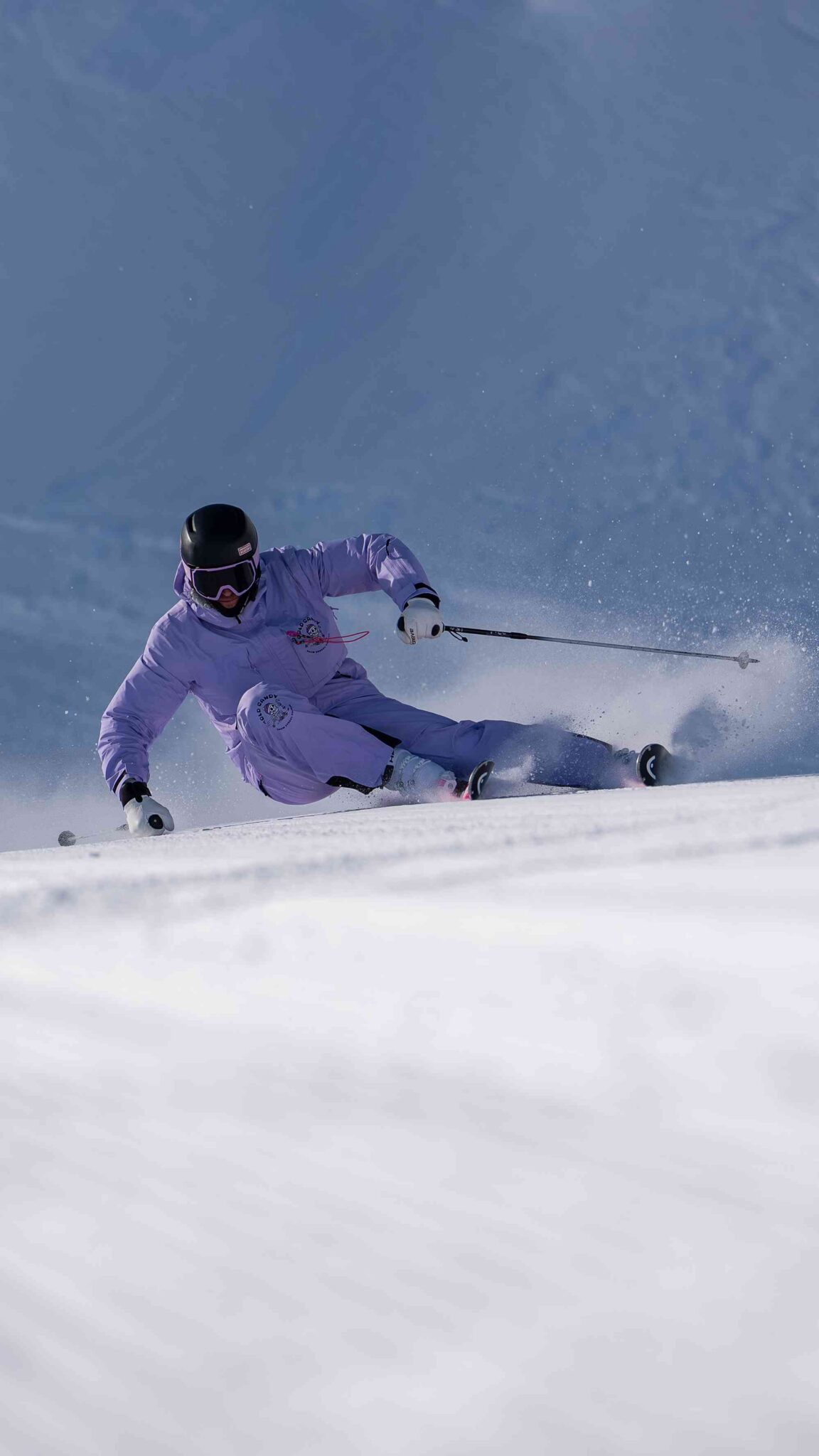
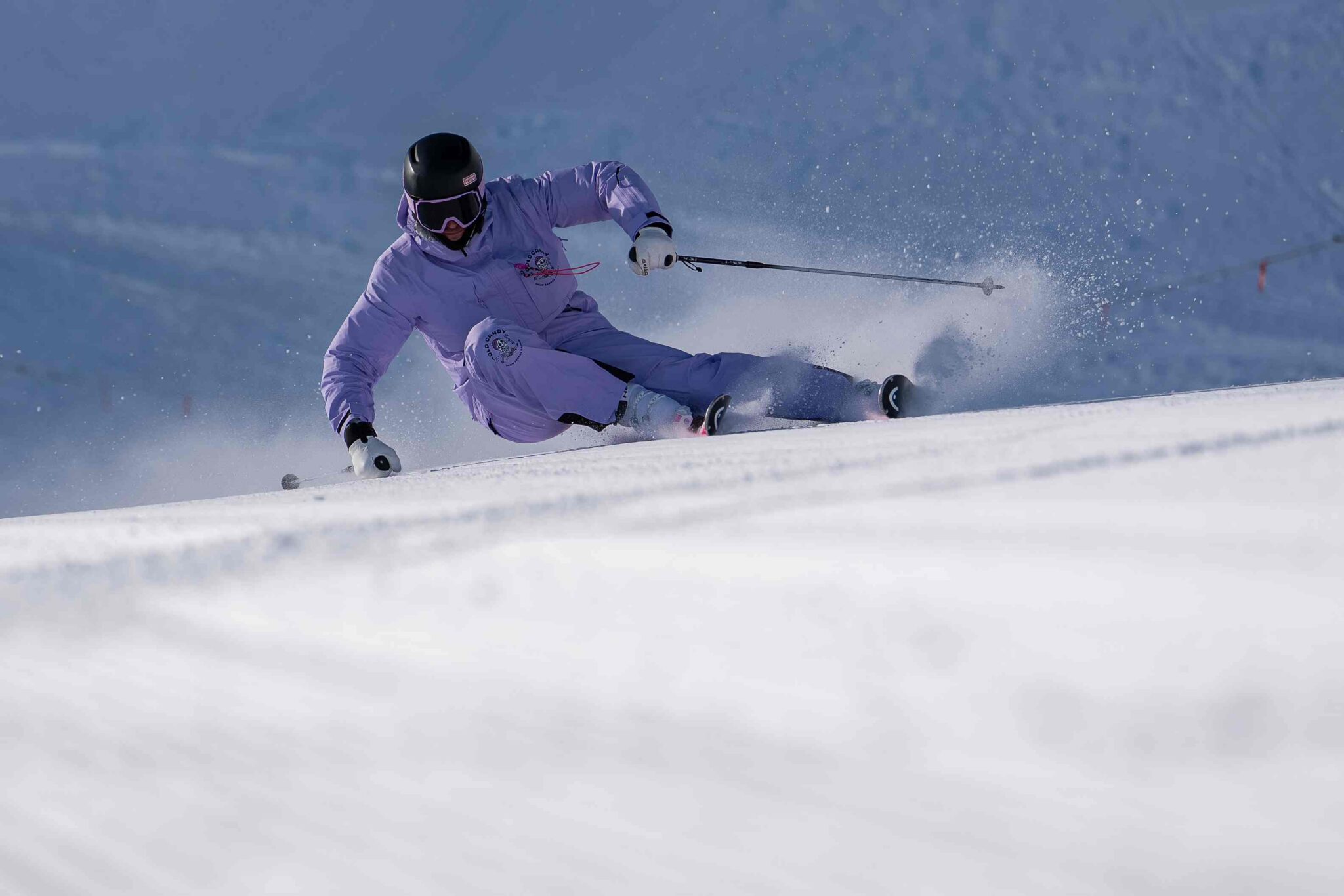
Insights with Geri Tumbasz, a highly qualified, international ski instructor and level 4 coach in Austria. He is the co-owner of ‘Cold Candy Ski School Academy’ in Austria, and has coached in 12 countries for over thirty seasons.
What is carving?
“It started in the mid 90s, and essentially is when the ski is gliding along its shape, its radius on the edges, and so it leaves a carved line behind. It’s separate from drifting, and it pretty much means that if someone is able to use that feature on the ski, they can be divided from just a good skier to an even better skier.”

What is usually misunderstood about it?
“There is a big difference between carving and drifting that gets misunderstood. Basically in technical terms, if someone wants to drift or steer the ski, it means they need an edge angle. So without edging there is no turn possible on the ski. Then there is a chance to set an internal turning impulse which requires extra steering angle through the feet, meaning the ski is not only on the edge but also gets turned by the skier or by the force. If a skier wants a clean carve, the turning impulse needs to be isolated. The skier needs to use both feet in a turn and the more edge they have, the more bent and shape the ski gets, the shorter the radius will be, resulting in a cleaner carve.
Is carving only done in skiing or can snowboarders also carve?
Carving originally started with snowboarders, using the deep metal side cuts on the board to cut sharp edges. “But because they had only one edge at the time to use, it was a skill, a pure skill. And that was hard to learn. So that’s where the learning curve fastened, because people are able to turn the board and slide, but to use the snowboard as a dynamic equipment and carve, it requires another level of balance and athleticism which is not for everyone. I think it’s a different style when compared to skis, and what is involved to perform a carve. For skis there is still a possibility to stay on the slope, have fun if someone is learning to carve, and accelerate to a new level of control on the skis. Once the skier is in a state of dynamic flow, using the outside forces to create the movement, that’s when it becomes addictive.”
What ski event would use carving the most?
“Funny enough they used to have an event that was specifically for carving, where they would have markers at every corner that skiers could lean into with their full body. I would say now that slalom skiing uses carving the most. It’s the high end of carving, in a way that controls the line as well as the edge, because not all the gates are at the same distance. It’s not always that easy to know how many meters are in between each gate and measuring the radius in which the skier can carve at.”

What are some easy techniques that can help riders begin to learn to carve?
“Before anything, you need to be able to parallel ski as a minimum requirement. Then to start carving on a ski there are a couple of options. Getting a shorter ski that is about chin height, or getting a ski that is called a short cover. It doesn’t matter exactly which one but the shorter skis give you the most feedback. If you start to carve they work really quickly at a low speed on a flat slope as well which is when it gets interesting. Actually, at the beginning a gentle slope is a lot better because it’s easier to learn and control when you are learning. On a more technical level, you need to somewhat relearn how to ski by using both legs to turn. Rather than the traditional one leg at a time, carving involves two legs to follow through with the movement. “
Words and Images: Cold Candy https://cold-candy.com/