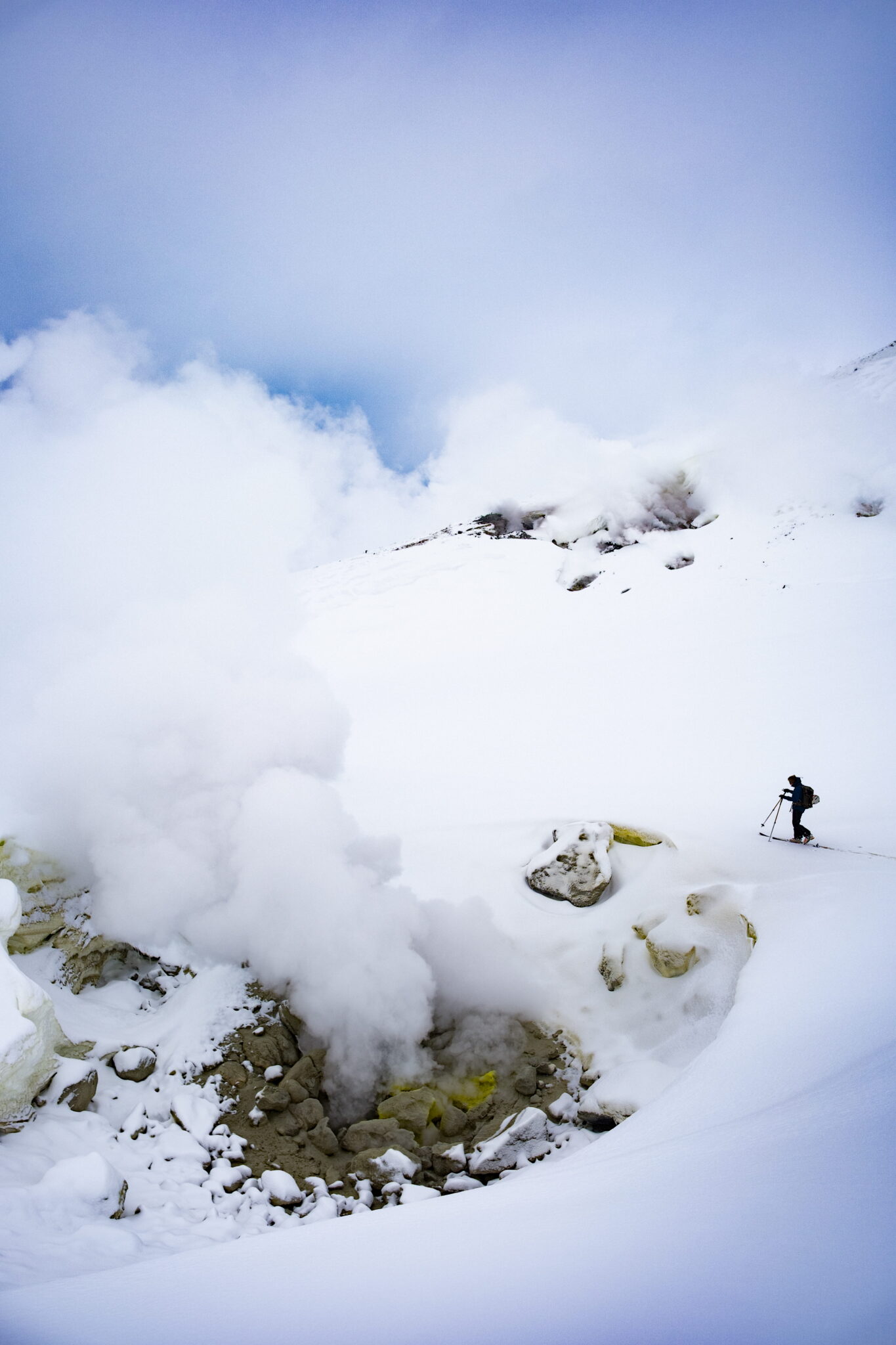
A backcountry ski trip to Hokkaido had been our dream for years. Japan’s northernmost island is home to rugged, active volcanoes, blanketed in some of the lightest snow on Earth.
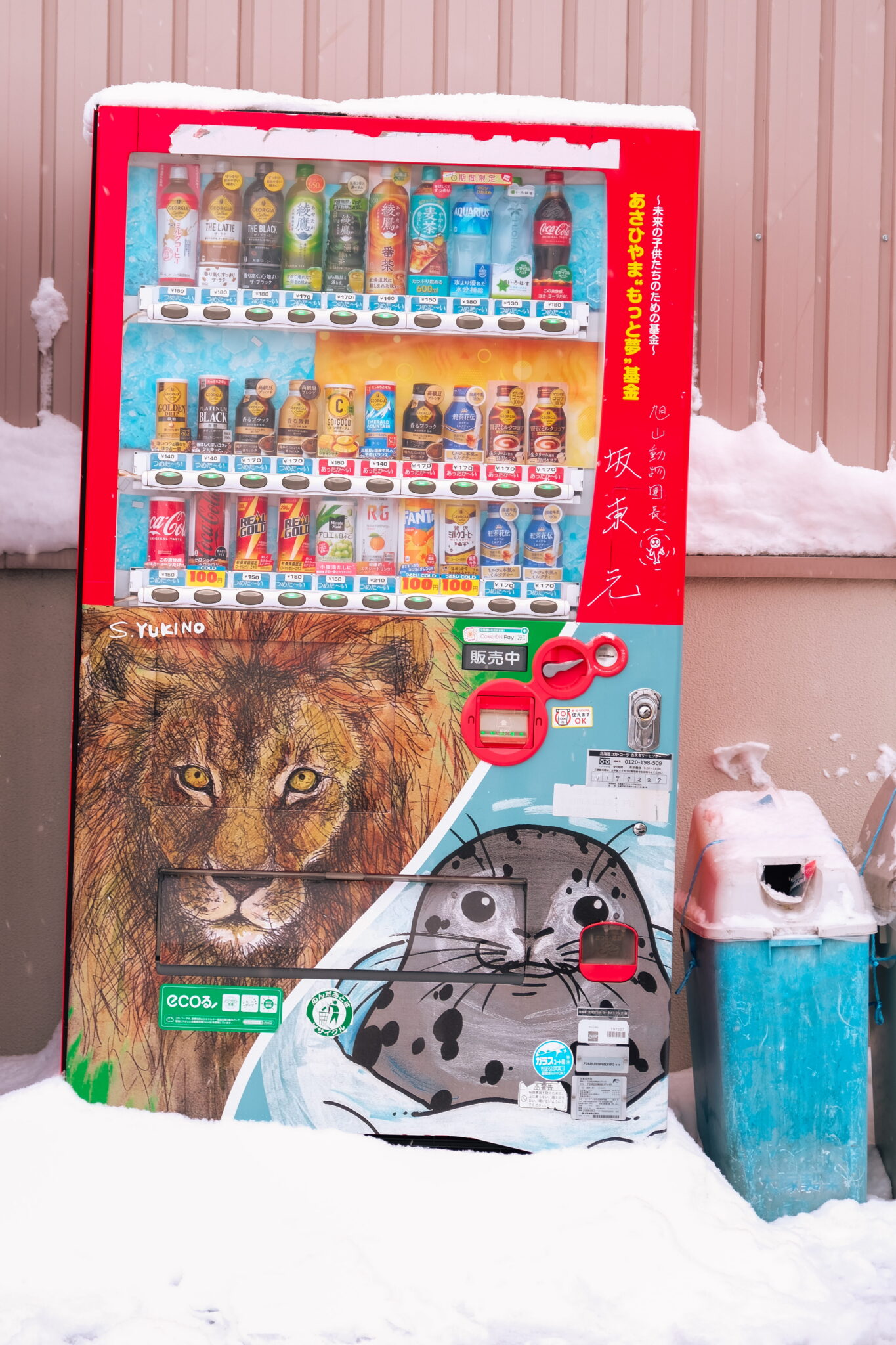
We chose Hokkaido for one simple reason: snow. And lots of it. Year after year, social media feeds are flooded with images of impossibly deep powder, faceshots in birch forests, and volcanoes wrapped in white. The idea of skiing those lines in the legendary, dreamlike “Japow” felt too good to be true. Well, the idea of eating $6 bowls of ramen every day sounded pretty good too!
From the first day we arrived, Mount Yotei – the Mount Fuji of Hokkaido, was calling us.
The volcano of the island. In local backcountry lore, you’re not considered a true Hokkaido skier until you’ve skied a volcano ;).
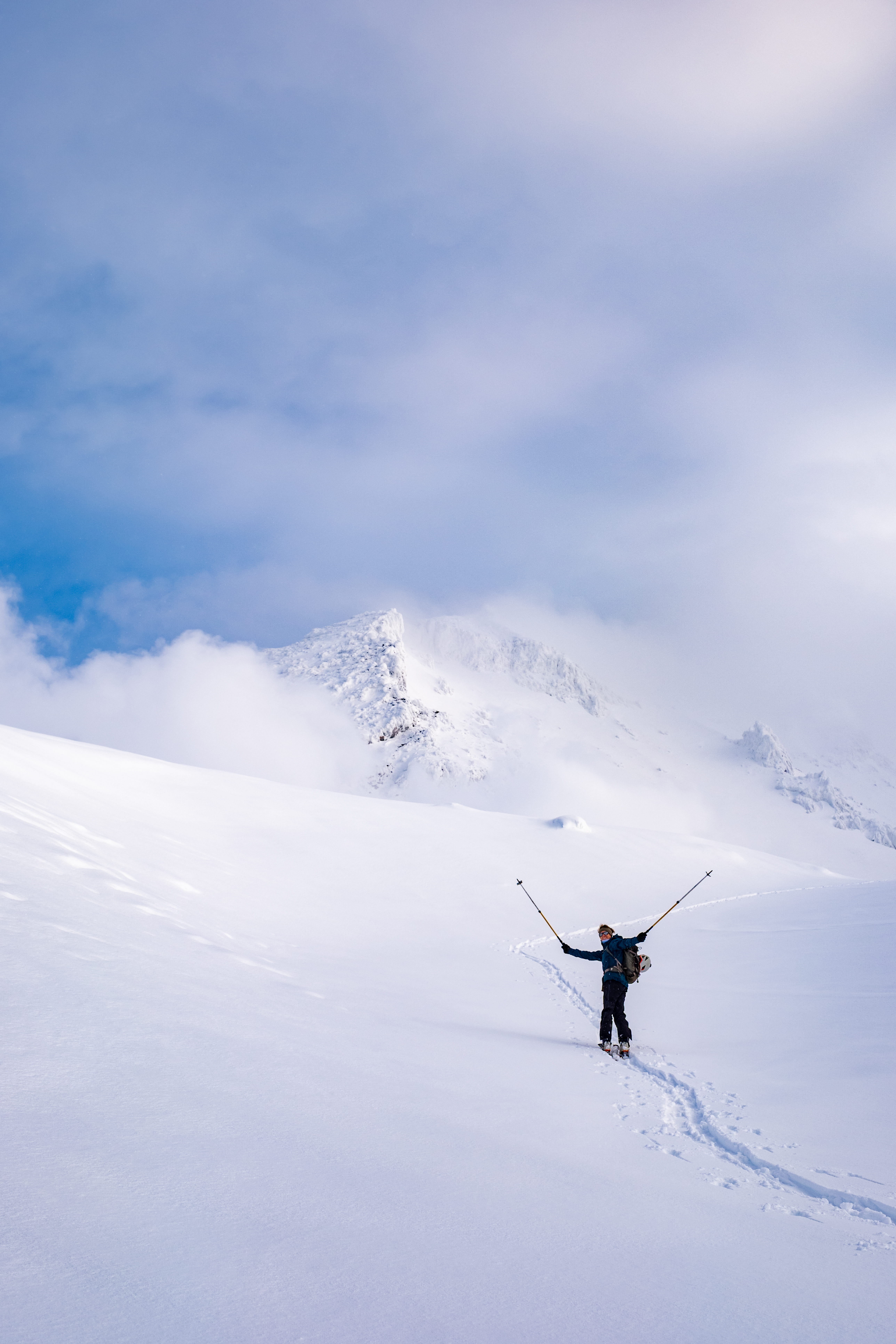
You must know that winter in Hokkaido is bitterly cold, and that’s exactly why the snow is so light and fluffy. Siberian winds gather moisture over the Sea of Japan before unloading relentless storms on the island’s peaks. For nearly three weeks, we were pinned down by constant blizzards, watching Yotei disappear day after day into a white void. Just as we were losing faith, two days before our departure, the forecast finally opened…“Omg, Tommy, tomorrow is the day,” I almost yelled.
Unexpected clear skies after a fresh 20-centimeter snowfall. Unreal. “Let’s check the avalanche conditions.” The bulletin said: Moderate. The volcano might finally be giving us a chance. That night, we stayed at a small homestay in the coastal town of Otaru, about a 1.5-hour drive from Mt. Yotei. It didn’t matter to us. Alarm at 5 a.m., skins on skis before sunrise, and let’s go…
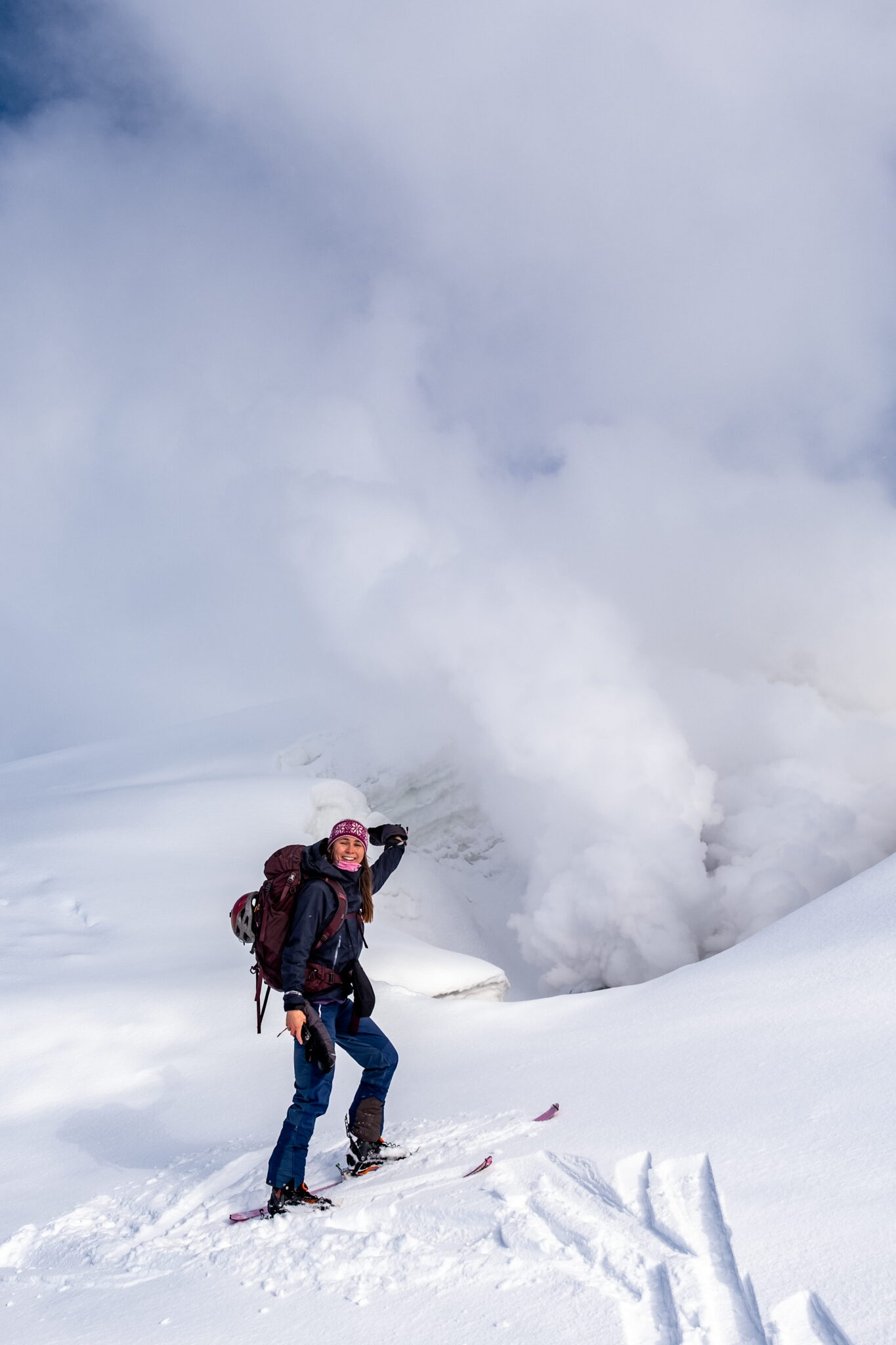
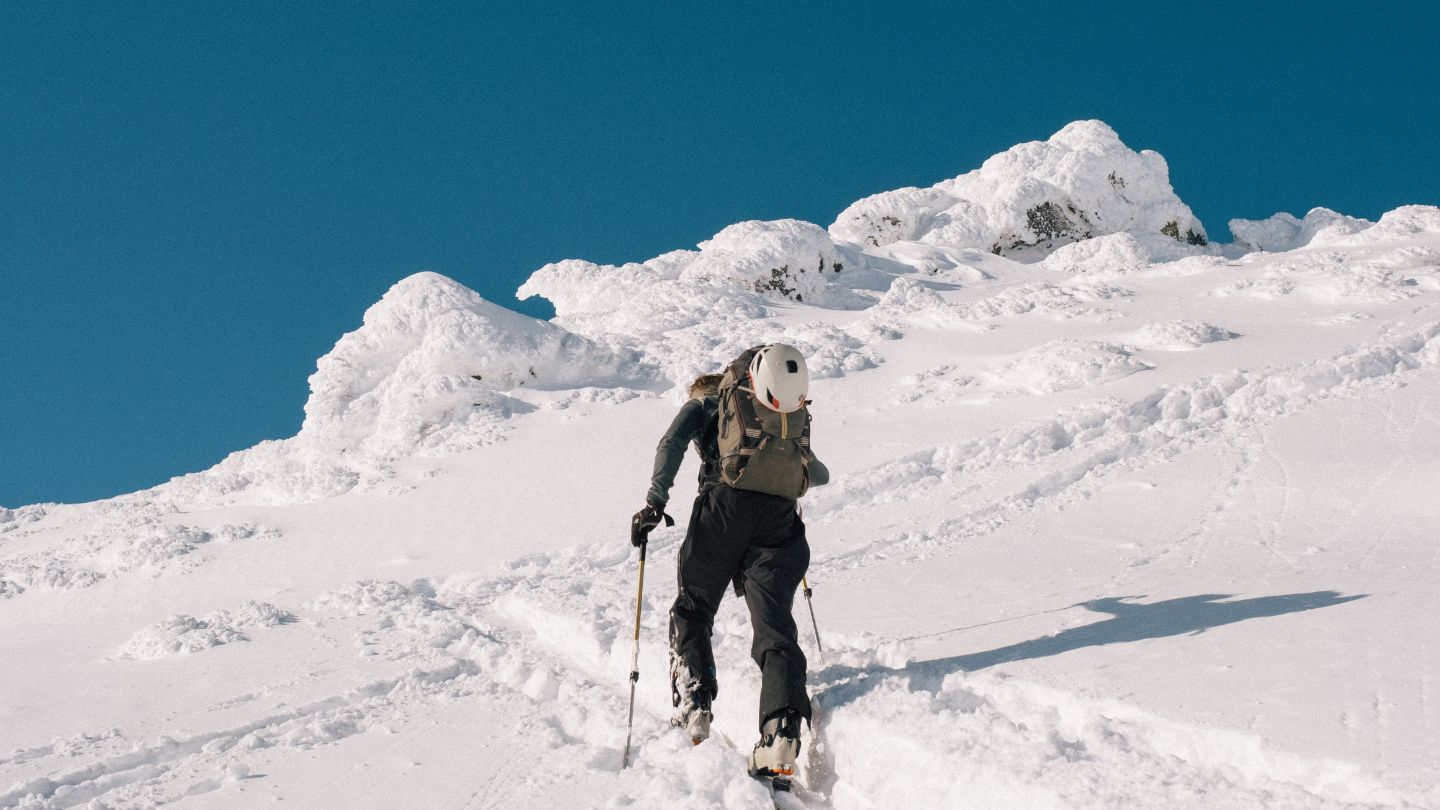
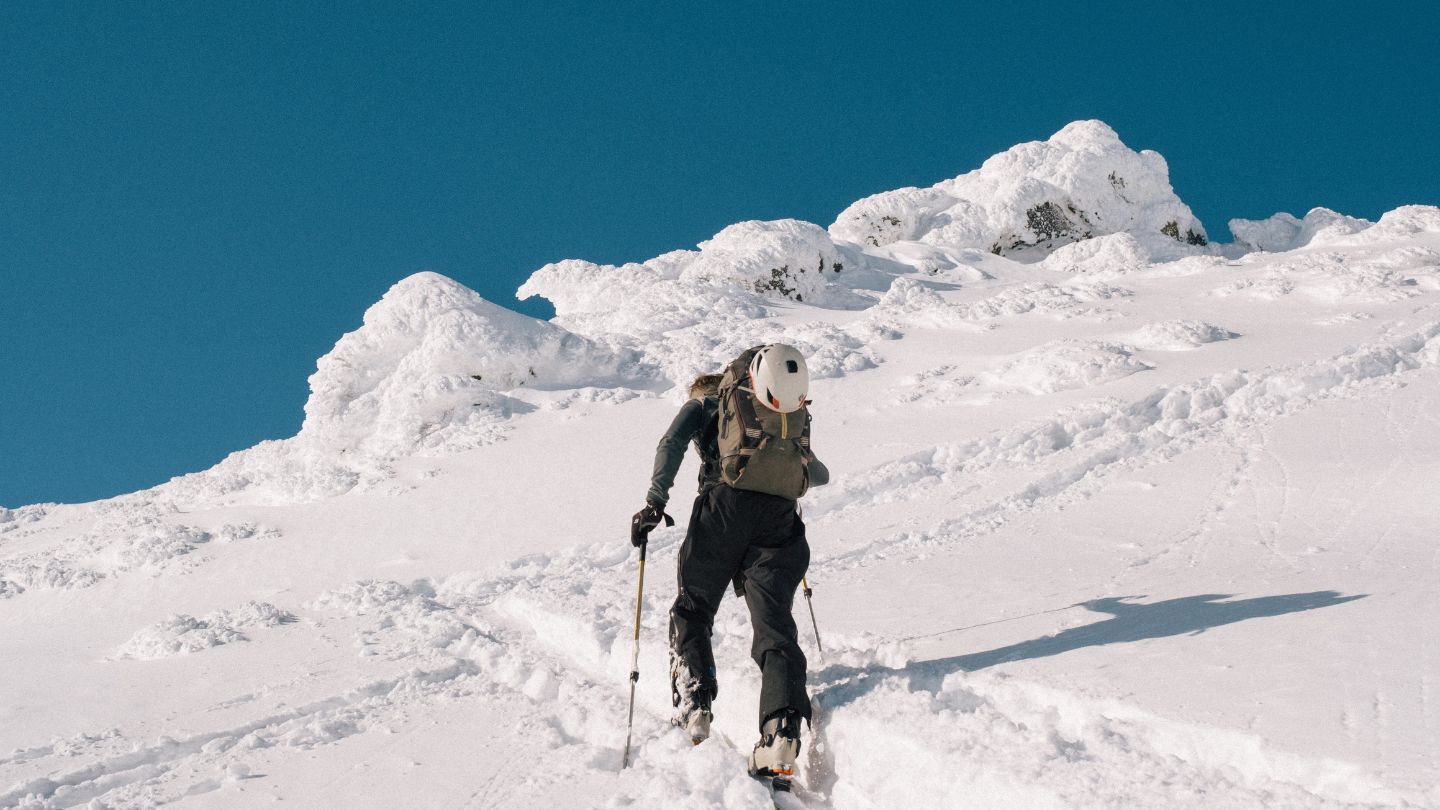
We arrived at the trailhead at 8 a.m., and the parking lot was full of locals. “Wow… well, I guess the forecast must be right today,” I laughed. We geared up quickly and started climbing. After only an hour, we found ourselves in dense fog. “I’m sure there’s blue sky up there – don’t stop!” I yelled to Tommy, seeing him get a bit discouraged. 1,600 meters of elevation. That’s a lot. After 2.5 hours, we finally popped out above the clouds – and it looked unreal.
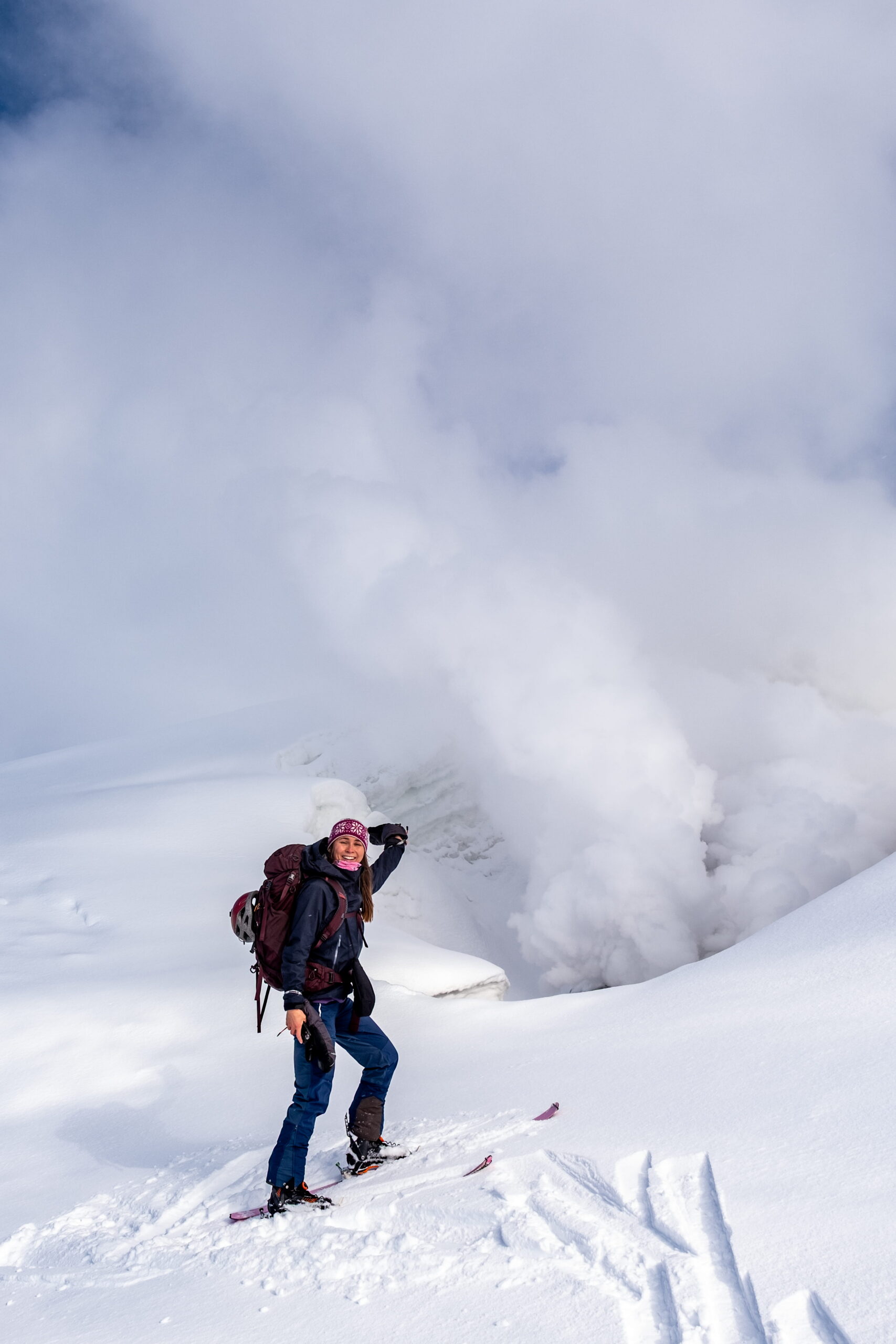
“Look! The summit isn’t that far!” Tommy shouted, pointing at the last 300 meters. I was short of breath, but the excitement was stronger. My skis started slipping backward on the steep skin track. “I really hope we won’t regret not bringing ski crampons,” I muttered. You should always bring them. Not taking them was reckless. We are so lucky though. The snow stayed powdery, and somehow we made it all the way to the summit.
We double-checked that our beacons were on. One last look. Then we dropped in, one after the other. The descent from Mt. Yotei was a full assault on our thighs, which were definitely not used to a 1,600-meter run. Freeriding in Japan is usually about short, punchy laps – this was something else. Just imagine 1,600 meters of pure powder. The first 200 meters from the summit are especially intimidating, with steep slopes hovering around 35-40%.
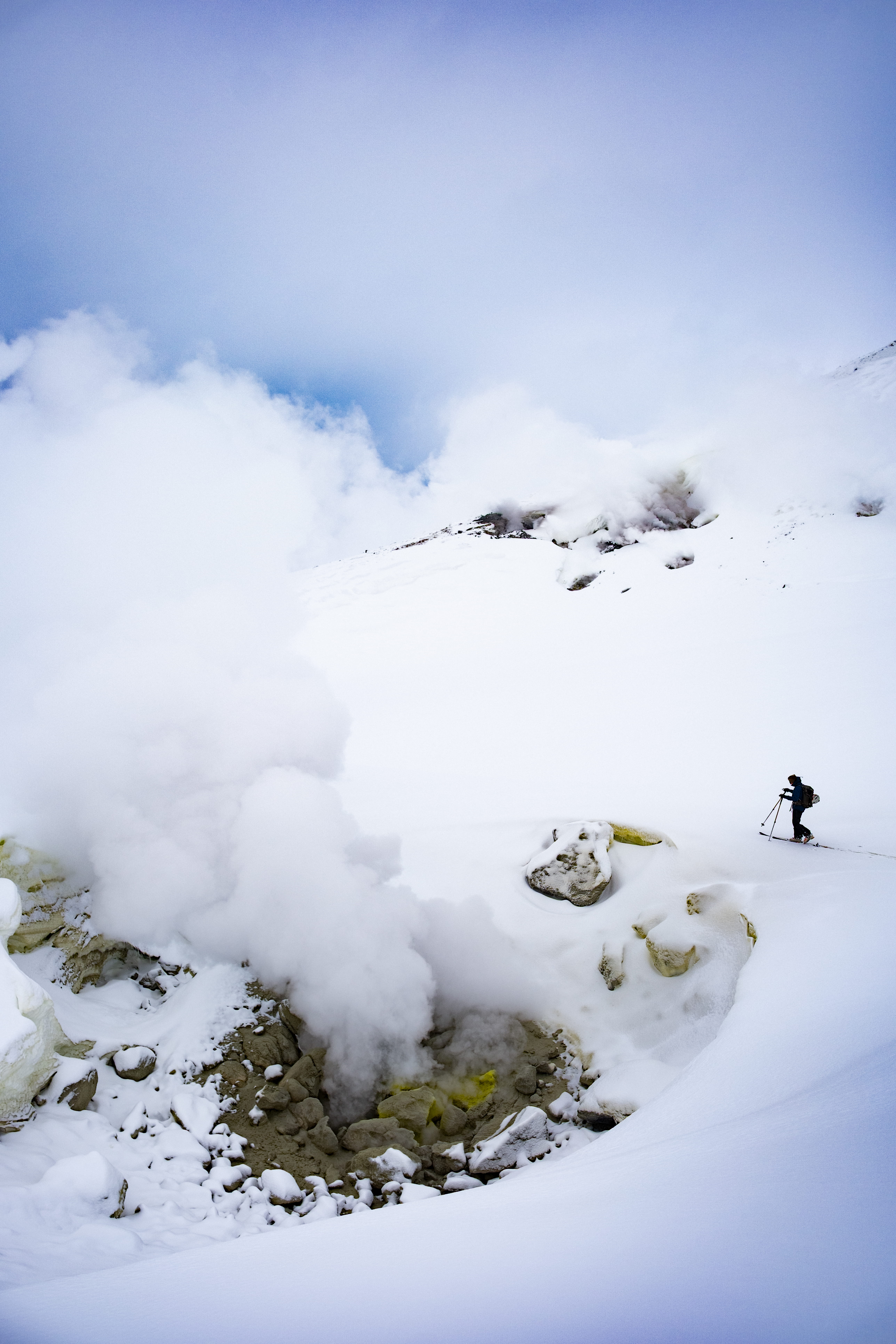
From the top, you also have the option to ski down into the crater itself. It’s incredibly tempting, but it would have added more time and vertical denivelation when our legs were already fading. Turning it down felt like a small loss in the moment, but it was the right call. We made it back to the car at 3 p.m. Exhausted. And stoked. “ONSEN TIME!” – We looked at each other and screamed. Thanks to Hokkaido’s intense volcanic activity, the island is dotted with natural hot springs – onsens, everywhere!
After a day like this, you can’t imagine a better gift for your muscles. A snack from 7-Eleven. A big bowl of ramen. A glass of sake. Then straight to bed in our ryokan. Oh, Japan. You ticked all the boxes.
NOTE: For our ski touring trips, we relied heavily on Hokkaido Wilds – a true bible for freeriders. However, always consider hiring a local guide and you will need proper equipment.